
Querida comunidad San Patricio:
Hoy una parte importante de la convivencia ocurre en espacios que no son físicos: grupos de mensajería, redes sociales, videojuegos y chats. Ahí también hacemos amigos, conversamos, compartimos ideas y nos divertimos. Pero esos mismos espacios pueden convertirse en lugares donde un comentario, una fotografía o una publicación lastimen a alguien.
El ciberacoso es el acoso o la intimidación que ocurre a través de medios digitales. Puede incluir mensajes hirientes o amenazas, rumores, fotografías o videos utilizados para avergonzar a alguien, cuentas falsas o acciones repetidas para humillar, excluir o atemorizar. Una diferencia importante es que puede continuar incluso cuando el alumno ya está en casa y afectar su tranquilidad, su estado de ánimo, su sueño, sus relaciones y hasta sus ganas de asistir o participar en el colegio.
Como directora, hay algo que me parece especialmente importante en este tema: nunca debemos minimizar lo que una persona está sintiendo porque “solo pasó en internet”. Para quien recibe un mensaje humillante, ve que están compartiendo algo sobre él o ella, o se siente atacado constantemente en un grupo, la experiencia es real. Y muchas veces lo primero que necesita es saber que puede hablar de ello y que no tiene que enfrentarlo solo.
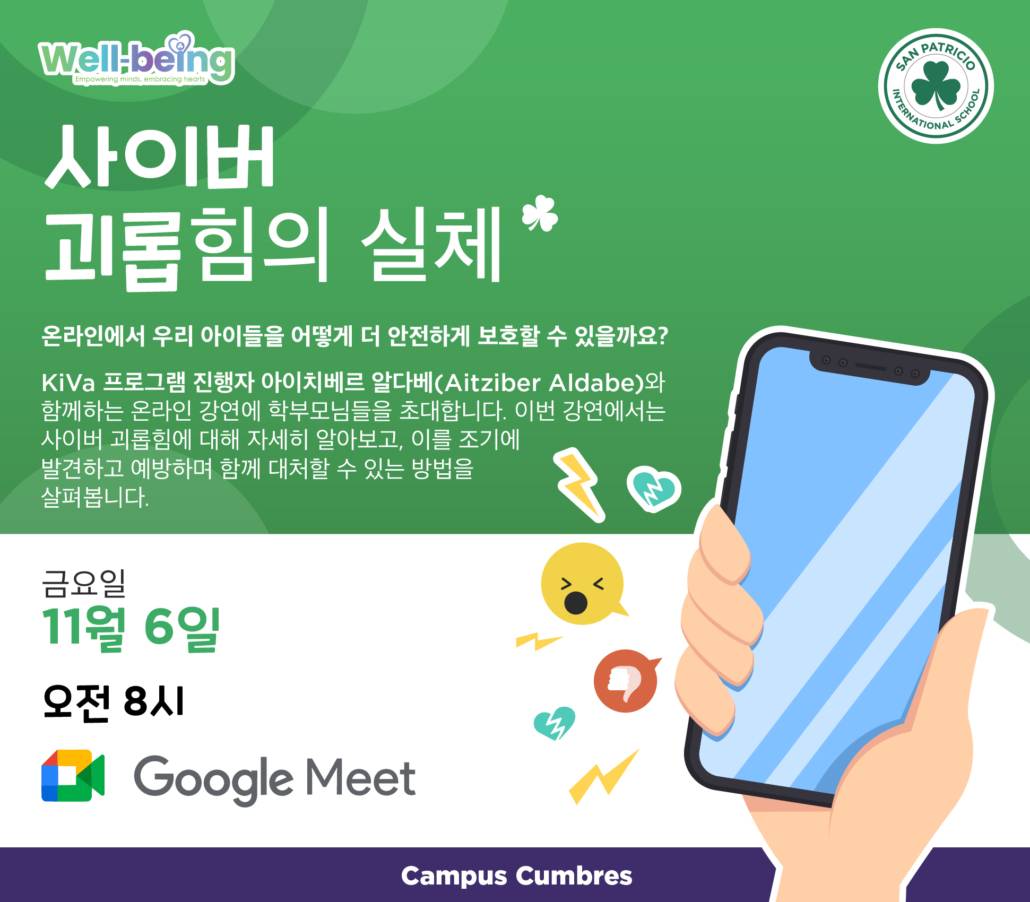
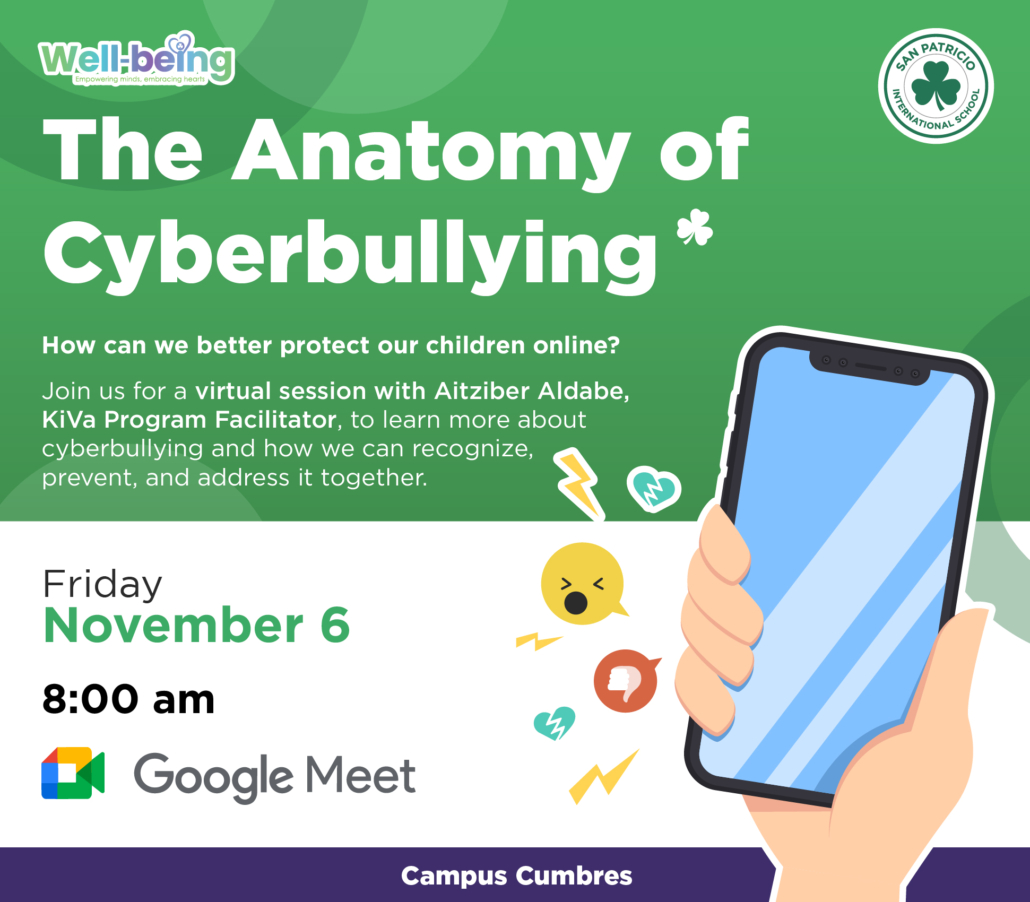
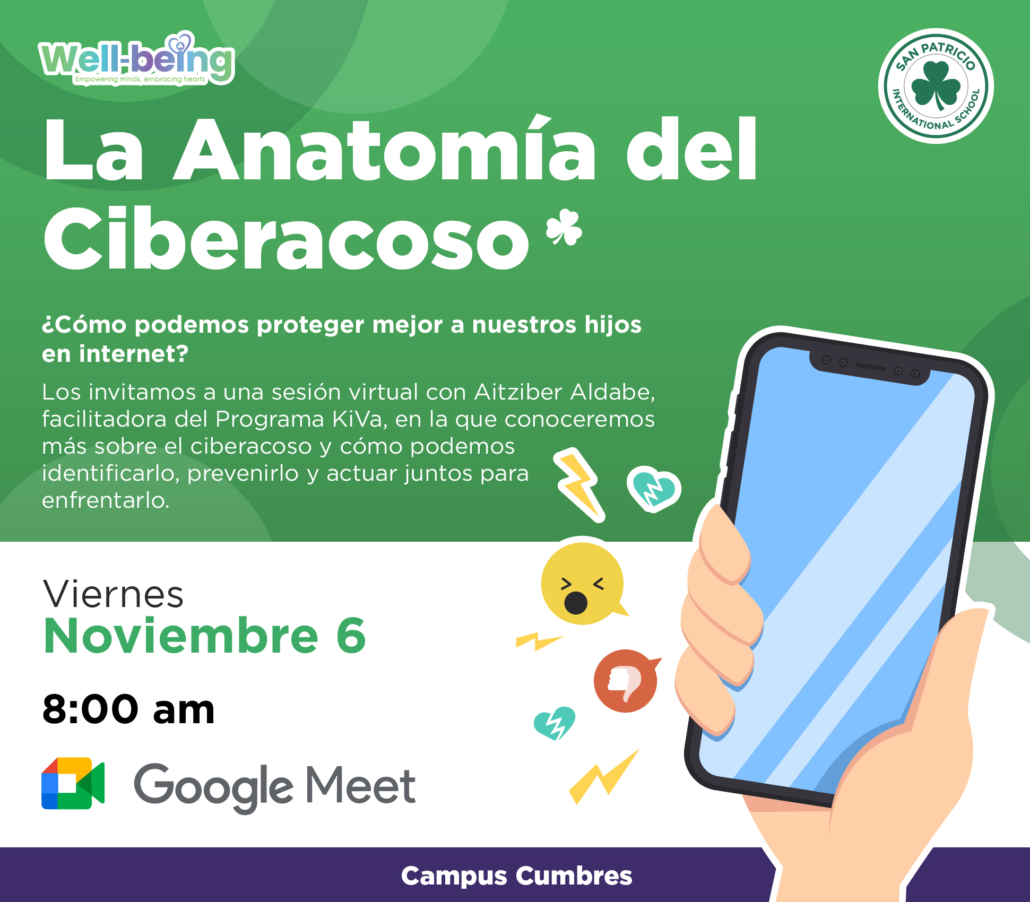
Por eso, nuestro departamento de Well-Being ha organizado la conferencia virtual “La Anatomía del Ciberacoso: ¿Cómo podemos proteger mejor a nuestros hijos en internet?”, impartida por Aitziber Aldabe, facilitadora del Programa KiVa. La sesión busca ayudarnos a comprender mejor cómo se presenta el ciberacoso, cómo identificarlo, qué podemos hacer para prevenirlo y cómo actuar cuando ocurre.
Viernes 6 de noviembre | 8:00 a.m. | Google Meet meet.google.com/xkx-spuc-kra
Esta conferencia forma parte del trabajo que realizamos en San Patricio International School con KiVa, el programa contra el acoso escolar que tenemos implementado en nuestro colegio. KiVa fue desarrollado en la Universidad de Turku, Finlandia, y está basado en investigación. Su modelo trabaja en tres áreas: prevención del acoso, intervención cuando existe un caso y seguimiento de lo que sucede dentro de la comunidad escolar.
Hay una idea de KiVa que considero especialmente valiosa: el acoso no involucra únicamente a quien agrede y a quien lo recibe. También importa el grupo que observa. Compartir una publicación, reenviar una captura, reírse de un comentario o permanecer indiferente puede alimentar una situación; en cambio, apoyar a quien está siendo lastimado y buscar la ayuda de un adulto puede cambiarla. KiVa trabaja precisamente en generar una cultura donde los alumnos entiendan la responsabilidad que tienen como parte del grupo.
A nuestros alumnos quiero decirles algo muy claro: si algo que sucede en línea los hace sentir humillados, amenazados, excluidos o inseguros, hablarlo no es exagerar ni acusar de más. Acérquense a sus papás o a la psicóloga de Well-Being de su nivel. Ellas están para escucharlos, orientarlos y acompañarlos cuando algo no está bien. Y si ven que alguien más está pasando por una situación así, tampoco tienen que convertirse en espectadores silenciosos.
A las familias, esta conferencia nos ofrece una buena oportunidad para entender mejor un entorno digital que cambia constantemente y abrir estas conversaciones en casa antes de que exista un problema. No podemos estar presentes en cada mensaje que reciben nuestros hijos, pero sí podemos construir la confianza necesaria para que sepan que pueden acudir a nosotros cuando algo no está bien.
En internet, igual que dentro del colegio, nuestras palabras y nuestras decisiones tienen consecuencias. El respeto, la empatía y la responsabilidad también se practican detrás de una pantalla.
Con aprecio:
Mrs. Nelda Garza
Directora de Campus Cumbres
San Patricio International School
사랑하는 San Patricio 가족 여러분,
오늘날 학생들의 많은 관계와 소통은 실제 공간뿐 아니라 메시지 그룹, 소셜미디어, 온라인 게임, 채팅과 같은 디지털 공간에서도 이루어집니다. 그곳에서 친구를 사귀고, 대화하고, 생각을 나누고, 즐거운 시간을 보내기도 합니다. 하지만 동시에 한마디의 댓글, 사진, 게시물이 누군가에게 큰 상처를 줄 수도 있습니다.
**사이버불링(cyberbullying)**은 디지털 공간에서 이루어지는 괴롭힘이나 위협을 말합니다. 상처를 주는 메시지나 협박, 소문을 퍼뜨리는 행동, 누군가를 창피하게 만들기 위해 사진이나 영상을 공유하는 행동, 가짜 계정을 만드는 일, 반복적으로 특정 학생을 배제하거나 겁주는 행동 등이 포함될 수 있습니다. 특히 사이버불링은 학생이 집에 돌아간 뒤에도 계속될 수 있어 마음의 안정, 기분, 수면, 인간관계뿐 아니라 학교에 가거나 활동에 참여하고 싶은 마음에도 영향을 줄 수 있습니다.
캠퍼스 디렉터로서 이 주제에서 특히 중요하게 생각하는 점이 있습니다. “인터넷에서 일어난 일일 뿐”이라고 해서 누군가의 감정을 가볍게 여겨서는 안 된다는 것입니다. 모욕적인 메시지를 받거나, 자신의 이야기가 온라인에서 퍼지는 것을 보거나, 그룹 안에서 지속적으로 공격을 받는 사람에게 그 경험은 분명 현실입니다. 그리고 그 순간 가장 먼저 필요한 것은 혼자 감당하지 않아도 된다는 사실을 아는 것입니다.
그래서 우리 Well-Being Department에서는 **“사이버불링의 구조: 인터넷에서 우리 아이들을 어떻게 더 잘 보호할 수 있을까요?”**라는 온라인 강연을 준비했습니다. 강연은 KiVa 프로그램 퍼실리테이터 Aitziber Aldabe가 진행하며, 사이버불링이 어떤 모습으로 나타나는지, 어떻게 알아차릴 수 있는지, 어떻게 예방하고 대응할 수 있는지를 함께 살펴볼 예정입니다.
11월 6일 금요일 | 오전 8:00 | Google Meet meet.google.com/xkx-spuc-kra
이번 강연은 San Patricio International School에서 운영하고 있는 학교폭력 예방 프로그램 KiVa의 일환이기도 합니다. KiVa는 **핀란드 투르쿠대학교(University of Turku)**에서 개발된 연구 기반 프로그램으로, 괴롭힘을 예방하고, 문제가 발생했을 때 개입하며, 이후 상황을 지속적으로 살피는 체계를 갖추고 있습니다.
제가 KiVa에서 특히 중요하다고 생각하는 점은 학교폭력이 가해자와 피해자 두 사람만의 문제가 아니라는 것입니다. 그 상황을 지켜보는 사람들도 큰 역할을 합니다. 게시물을 공유하거나 캡처 화면을 전달하고, 누군가를 비웃거나 아무 일도 아닌 것처럼 지나치는 행동은 상황을 더 악화시킬 수 있습니다. 반대로 괴롭힘을 당하는 친구를 지지하고 어른에게 도움을 요청하는 행동은 상황을 바꿀 수 있습니다. KiVa는 학생들이 자신도 그 관계 안에서 중요한 역할을 하고 있다는 점을 이해하도록 돕습니다.
학생들에게는 한 가지를 분명하게 말하고 싶습니다. 온라인에서 일어나는 일 때문에 모욕감을 느끼거나, 위협받거나, 소외되거나, 불안하다고 느낀다면 그 이야기를 꺼내는 것은 절대 과민반응이 아닙니다. 부모님이나 각 학년을 담당하는 Well-Being 심리상담 선생님에게 이야기해 주세요. 여러분의 이야기를 듣고, 방향을 함께 찾고, 필요한 도움을 주기 위해 그 자리에 있습니다. 그리고 주변의 누군가가 이런 상황을 겪고 있다면 조용히 지켜보기만 할 필요도 없습니다.
가정에서도 이번 강연을 통해 빠르게 변화하는 디지털 환경을 조금 더 이해하고, 문제가 생기기 전에 자녀들과 이런 이야기를 나누는 계기가 되었으면 합니다. 부모님이 자녀가 받는 모든 메시지를 직접 볼 수는 없지만, 무언가 잘못되었을 때 언제든 이야기할 수 있다는 믿음은 만들어 줄 수 있습니다.
인터넷에서도 학교 안에서와 마찬가지로 우리의 말과 행동에는 결과가 따릅니다. 존중, 공감, 책임감은 화면 뒤에서도 똑같이 중요합니다.
감사합니다.
Mrs. Nelda Garza
델 파세오 캠퍼스 교장
San Patricio International School